
Showing posts with label Kayla Evans. Show all posts
Showing posts with label Kayla Evans. Show all posts
Saturday, December 19, 2015

Friday, December 18, 2015
Kayla Evans Chapter 8
Link to correct 8_1: https://vimeo.com/149400271
8_2:
https://vimeo.com/149400066
Kayla Evans 12/18 Final Project Process
Documentation of the creation of my final project, in-progress:


The initial phases of my interface, created using plywood:

The main box, stained ebony:

I then followed Charlie's advice regarding creating a small box to hold my fan and dust sensor together. I created two frames, one for each component/sensor, that I then attached together using wooden dowels.

I stained the small rack, and gave my interface a second coat of stain.


Image of my perma board in-progress. After troubleshooting with Charlie about possible reasons why the dust sensor didn't work for my second mini-project, resistors were added in parallel and in-series to help bring the voltage that the dust sensor's LED received closer to that used in the example code and schematic from http://arduinodev.woofex.net/2012/12/01/standalone-sharp-dust-sensor/


My dust sensor stopped functioning properly again, so I troubleshot with Charlie; he suggested soldering the components directly into my perma board, which solved the issue:
(video shot by Adreenah Wynn)
An initial, tentative placement of my circuit inside of the interface:

A final shot of my box, assembled, with the piece of metal attached to the motor:

Kayla Evans 12/18 Final Project Documentation
Documentation and images of my final project (crit set-up, overall set-up, and documentation of how it works):
Documentation of crit set-up:
https://vimeo.com/149399889
https://vimeo.com/149399888
Documentation of how it works:
https://vimeo.com/149399981
https://vimeo.com/149399976
https://vimeo.com/149399972
https://vimeo.com/149399906
Images of overall set-up:

Documentation of crit set-up:
https://vimeo.com/149399889
https://vimeo.com/149399888
Documentation of how it works:
https://vimeo.com/149399981
https://vimeo.com/149399976
https://vimeo.com/149399972
https://vimeo.com/149399906
Images of overall set-up:

For this project, I was originally interested in having the act of sifting through evidence or scraps of a story written on burnt paper affect the quality of light/images from a projector. In this piece, an alternate version of my second mini-project, the projector functions as a light source; the heart of this version involved the light moving via a reflective piece of metal to illuminate different portions of the paper as the viewer sifts, tying into the concept of secrets. This piece also builds on a project I created in my Experimental Drawing course, taken during spring semester.
My original design for this alternate version involved secrets written on the horizontal piece of paper that were revealed as the light moved; after receiving feedback from crit, I feel as if the piece would have benefitted from the inclusion of this text.
Sunday, November 22, 2015
Kayla Evans 11/22 Second Mini-Project
From Wednesday's crit of the second mini-project.
Here are links to documentation of my second mini-project:
https://vimeo.com/146580279
https://vimeo.com/146580277
Sifting through ash in hourglass causes feather to sweep ash away and reveal text, written on the bottom of the box. However, dust sensor doesn't accurately read.
Here are links to documentation of my second mini-project:
https://vimeo.com/146580279
https://vimeo.com/146580277
Sifting through ash in hourglass causes feather to sweep ash away and reveal text, written on the bottom of the box. However, dust sensor doesn't accurately read.
Wednesday, November 11, 2015
Kayla Evans 11/11 Final Project In-Progress
The 6-pin JST components I ordered from Sparkfun weren't the right size either, so I dismantled them and connected the wires directly to the pins of my dust sensor. I connected wires directly to my second dust sensor as well. Although I've tested one of my dust sensors hooked up in this way, and it successfully transmits data, I'm still worried about how sturdy this set up is.


Moreso, I tested one of my dust sensors, and while it's mostly successful at sending data, I still have to iron out a lot of kinks with the code. This test proves it's sending data, but it doesn't seem to be sensing the amount of particles present.
Kayla Evans 11/11 In-Progress Crit
In-progress work from Monday's crit:
-Researched component and pins, but code detailing how input should be read (i.e, analogRead(), etc) is hard to come by.
-Started on creating physical aspects of project
-Still need 6-pin JST for dust sensor


-Researched component and pins, but code detailing how input should be read (i.e, analogRead(), etc) is hard to come by.
-Started on creating physical aspects of project
-Still need 6-pin JST for dust sensor


Kayla Evans 11/11 Adafruit Shift Registers
Links to documentation of my completion of the Adafruit Shift Register (chapter 5) tutorial:
Myself using the serial monitor to turn on single LEDs:
https://vimeo.com/145458627
Using the serial monitor at higher baud rates to turn on multiple LEDs:
https://vimeo.com/145458628
And myself using a different baud rate in both the serial monitor and code, creating "mismatched" baud rates:
https://vimeo.com/145458629
Myself using the serial monitor to turn on single LEDs:
https://vimeo.com/145458627
Using the serial monitor at higher baud rates to turn on multiple LEDs:
https://vimeo.com/145458628
And myself using a different baud rate in both the serial monitor and code, creating "mismatched" baud rates:
https://vimeo.com/145458629
Sky Craft Scavenger hunt pictures:
Scavenger Hunt


Please take a picture of each item on the scavenger hunt using your phone. You may work in pairs. You need also to take some notes getting serial numbers and label text so that you can learn more about the item and its specs when you get home. Post small sized pictures and text describing objects on blog. I need enough information to know what it is. Have fun!
Please locate 4 different kinds of LEDs. Look up the voltage and amp specs for each. 2 points


Find two giant capacitors.1 point


Find two devices that contain solar panels and tell me what they are. 1 point


Find a breadboard. .5 point


Find 5 devices that contain sensors and tell me what they do. 2.5 for devices what they do 3 for total of 3 points


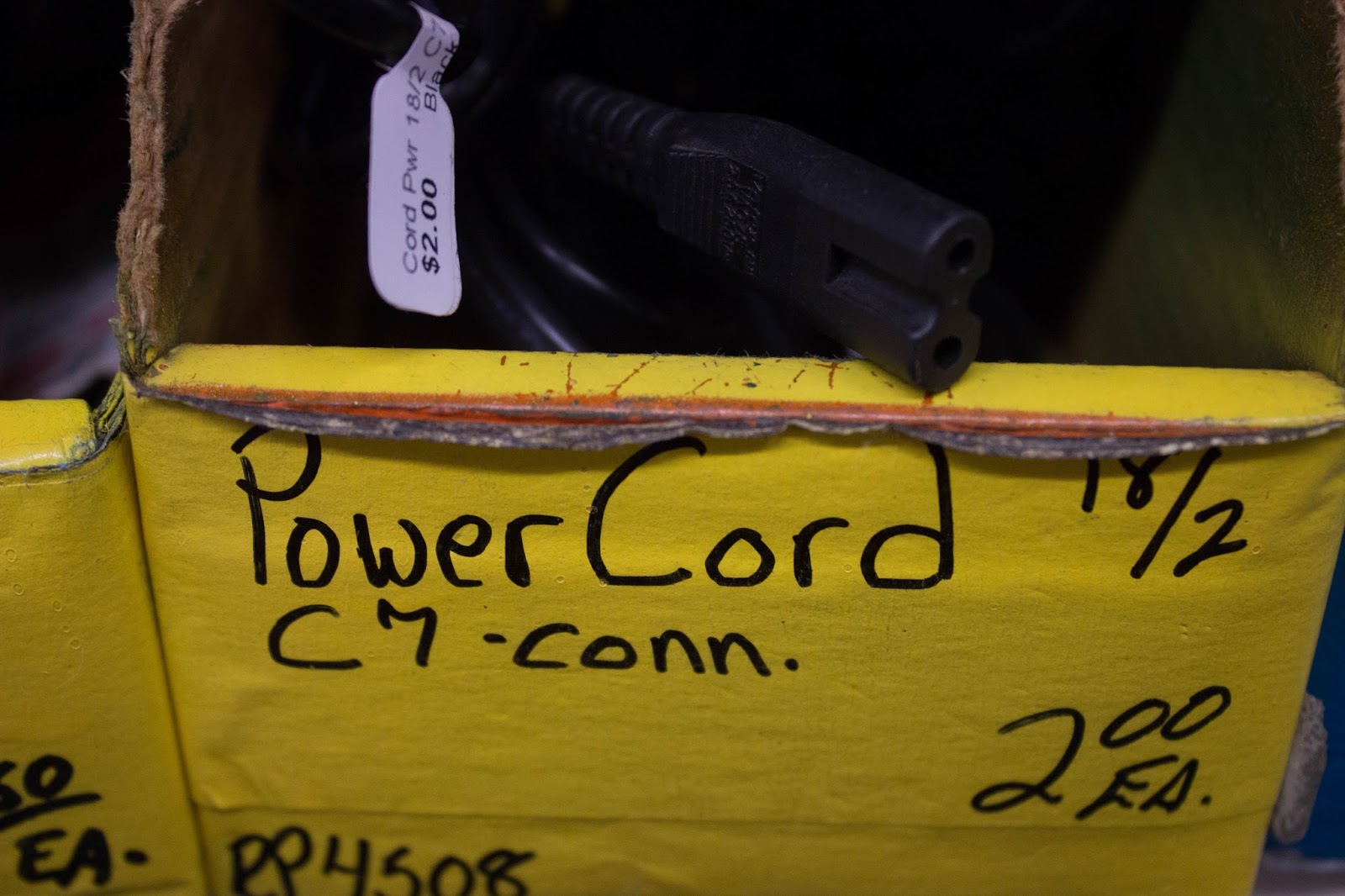
Find 6 different kinds of cables and give me specs of each size in gauge. Also look up what each kind




Find a remote control. .5 points

Locate an electronics kit. What does it do? .5 points

Find a solderable perf board. You might want to purchase some of these. .5 points

Find 5 different motors and describe each. Locate their serial numbers and look up what they might be used for. Please tell me if they are DC motors, servo motors, AC/DC motors or stepper motors. 3 including descriptions


Find 3 types of camera or optical devices. 1.5 points


Find three devices that deliberately (sound production is part of their function) produce sound and tell me what they are. . 2 points including what they do


Find five different kinds of potentiometers or variable resistors. What is their range of voltages? What are they used for? 3 points including what they are used for


Find three different types of magnets. 1.5 points


Find a device that counts. .5 points

Find an LCD panel. .5 points


Find 6 things that are really interesting to you that you might want to use in a project. 3 points


Subscribe to:
Posts (Atom)