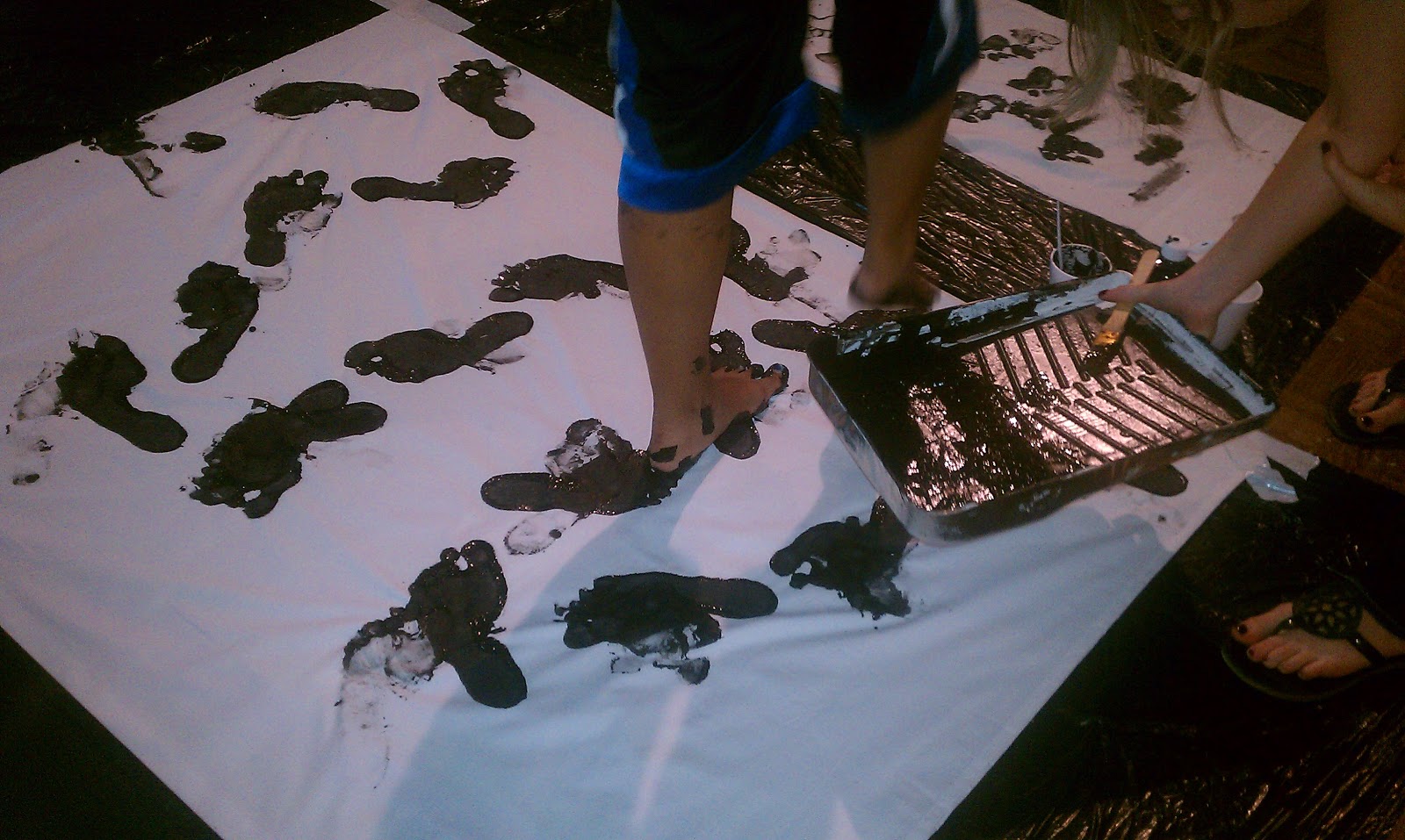
I thought crit went just as well as it could considering the circumstances with the weather. Everyones projects turned out great and I really had a lot of fun with them. It would have been way more exciting if we could have lead the class from FAC to the GradHouse instead of just aimlessly walking around the first floor of FAD. Most people mentioned the overall shape of the object and the size of it. Many people said they liked the largeness of the object and that it helped emphasize the concept. It was divided amongst people who said they think we should have added extra gadgets and safety objects to the device. I think the device would have standed better as a piece if it was a little bit more ridiculous. Like bright colors for the object and additional sensors such as the gas sensor and the carbon monoxide sensor. Maybe this project can see the light of day again next semester.
All of the code in each of its stages are visible on my GitHub:
https://github.com/tgreena/Sensors/tree/master/SensorsProject2
The Fritzing Diagrams are available for download on my GitHub:
https://github.com/tgreena/Sensors/tree/master/SensorsProject2/Fritzing
In the works
Example
Wearing it
I am going to have work with my internship emailed to you tonight.
// Project 38
#define sensorPin 9
int ledPin1 = 1;
int ledPin2 = 2;
int ledPin3 = 3;
int ledPin4 = 4;
int ledPin5 = 5;
int ledPin6 = 6;
int ledPin7 = 7;
int ledPin8 = 8;
int ledPin10 = 10;
int ledPin11 = 11;
int ledPin12 = 12;
int ledPin13 = 13;
//float ledValue = 255; // The brightness of the LED
long pwmRange, inch;
void setup() {
// Start serial communications
Serial.begin(9600);
pinMode(sensorPin, INPUT);
pinMode(ledPin1, OUTPUT); // Set the ledPin to an OUTPUT
pinMode(ledPin2, OUTPUT);
pinMode(ledPin3, OUTPUT);
pinMode(ledPin4, OUTPUT);
pinMode(ledPin5, OUTPUT);
pinMode(ledPin6, OUTPUT);
pinMode(ledPin7, OUTPUT);
pinMode(ledPin8, OUTPUT);
pinMode(ledPin10, OUTPUT);
pinMode(ledPin11, OUTPUT);
pinMode(ledPin12, OUTPUT);
pinMode(ledPin13, OUTPUT);
Here is process of my project working during Critique in the dark. My model for this project is Jason. While he was wearing the brain, he had a sensory deprivation experience, which I thought was interesting.
Here is the video:
ps. the light is not the best, but you can kind of see the form of Jason with the brain on his head and the lights working.
Reflection: I had a lot of fun with this piece, despite the minor setbacks. The first issue that I had was not receiving the microphone that would work with my project until the day of critique itself (go figure). But I worked through that and created another analogy for the idea of connections and being close to another person to gain understanding. Also, it was brought to my attention that I needed more LEDs and in other areas of the brain, which I agree with. In a possible addition to this piece, I could use an arduino mega so that I could have more pins to put LEDs in. One of the critiques that I found most interesting is the idea of sensory deprivation in many categories. I might like to explore this a little bit more. One thing I thought would be really interesting is when someone mentioned making a brain that restricts your sight and then creating a room where they could not be hurt and all they could do is hear and touch. Another interesting deprivation room would be to only allow seeing within the space. I agree that the lights needed to be placed in different areas of the brain and had forgotten or gotten stuck on the idea of the body being cognizant of speech rather than touch and distance. Ultimately, I would like to expand on this project, possibly in my last semester as installation or advanced experiments.
This work addresses concepts surrounding(mis)navigation, presence and absence, and transformation from one state to the next. Through the gesture of lighting a match and holding it above a lens, a sequence of panels containing drawn moth carcasses appear and dissolve behind the panes of a window ending in dust. This gesture and the context of an altar-like experience intends to evoke connotations of investigation, ritual, memorial, and passage. The moths depicted are all found and collected as a result of their attraction to light.
I’m most interested in poetic intersections:
• Why do humans and moths share an attraction to flame and light especially in darkness? • Can the illumination • How does the act of lighting a match to reveal a narrative of dissolution involve us in an act of immolation as defined as (1) to kill as a sacrifice, (2) to kill (oneself) by fire, and (3) to destroy?
• Can the moth's attraction to flame be an effective metaphor for our need to investigate mystery?
• Can this work serve to evoke scientific as well as spiritual investigation?
• Does investigation of this nature help or hinder our individual journeys? • I'm borrowing a bit from comic conventions as well by using the window panes as panel sequences. There is a story to be told. What are the viewer's limitations both in terms of attention and the span of a burning match threatening to burn oneself?
Though the work functions well enough now there are several points that need fine tuning.
1. Affordance: The class was primed to know how to approach the work, but others who I’ve had interact with the work are not. How can I better indicate an affordance? Two things I’m considering is using a larger lens and creating a shield around it which will help direct people and the matchlight more appropriately. The lens is more compelling than a candle though I'm a little wary of pushing the precious altar-ness too much. Can an empty jar work better? Should I indicate there is an end to reach? What might be the possible solutions?
2. Light quality: Something both Orlando and Katerie pointed out was the light has a sense of lightening bugs rather than moth associated flame. I’m seeking to hack warm light LEDs from Xmas lights and changing the code to flicker more. It’s requiring a bit of stare time as I find the slower fade more contemplative and I'm not yet convinced flickery-ness isn't too distracting and slow for the length of the match.
3. Presentation of the work: How to light a work that needs darkness to perform, but is still formally important? This is my greatest concern at the moment. Should the floor of the work be lit? Should I shade the gallery lighting so the window is only in shadow? Should the spotlight be replaced with a lower wattage?
4. Construction: Still haven’t fully embraced whether I should hide the light sensor wire or embrace it by extending it looped on the floor2. The level of surprise of the newly initiated is pretty satisfying, so I’m considering letting it be magic.
4. Working Title: Navigate/Immolate (directive, definitive)
I really enjoyed the feedback from Julia about the box being like a coffin. I entertained the thought of it being like a jewelry box, cigar box, and treasure box - happy precious items - but it didn't cross my mind that it was also like a coffin or an urn, still items of precious value, but in a solemn, sentimental, or even morbid way. I like the element of sinister that this idea brings to the piece. If we were to expand on this, we could emphasize that aspect more to add more dimension to the concept.
When we had the piece up and running, I saw the interior of the box as being more galaxy-like than I expected as well. I think the clay/dirt facade being silhouetted by the dim lights was part of this issue. However, I didn't mind it - the galactic appearance gave the interior of the box a Narnia kind of feel, which was pretty cool and part of what we were going for. Despite some debate over whether the quote on the box was necessary, I still think it was important to direct the ideas of the viewer to the earth - especially since in the interior was going in more of a galactic direction. However, I love and encourage different interpretations because, after all, that's what art affords! But I do agree in hindsight that the quote may have functioned better on the interior of the box.
I think Kerry and I were self-conscious that we had some obvious problems with the clay inside the box, and we just didn't want anyone to point it out as if we didn't know, haha. But thankfully, I don't even think our mistakes were as evident as we thought because of the darkness inside the box.
Here are some documented images & videos from crit day!